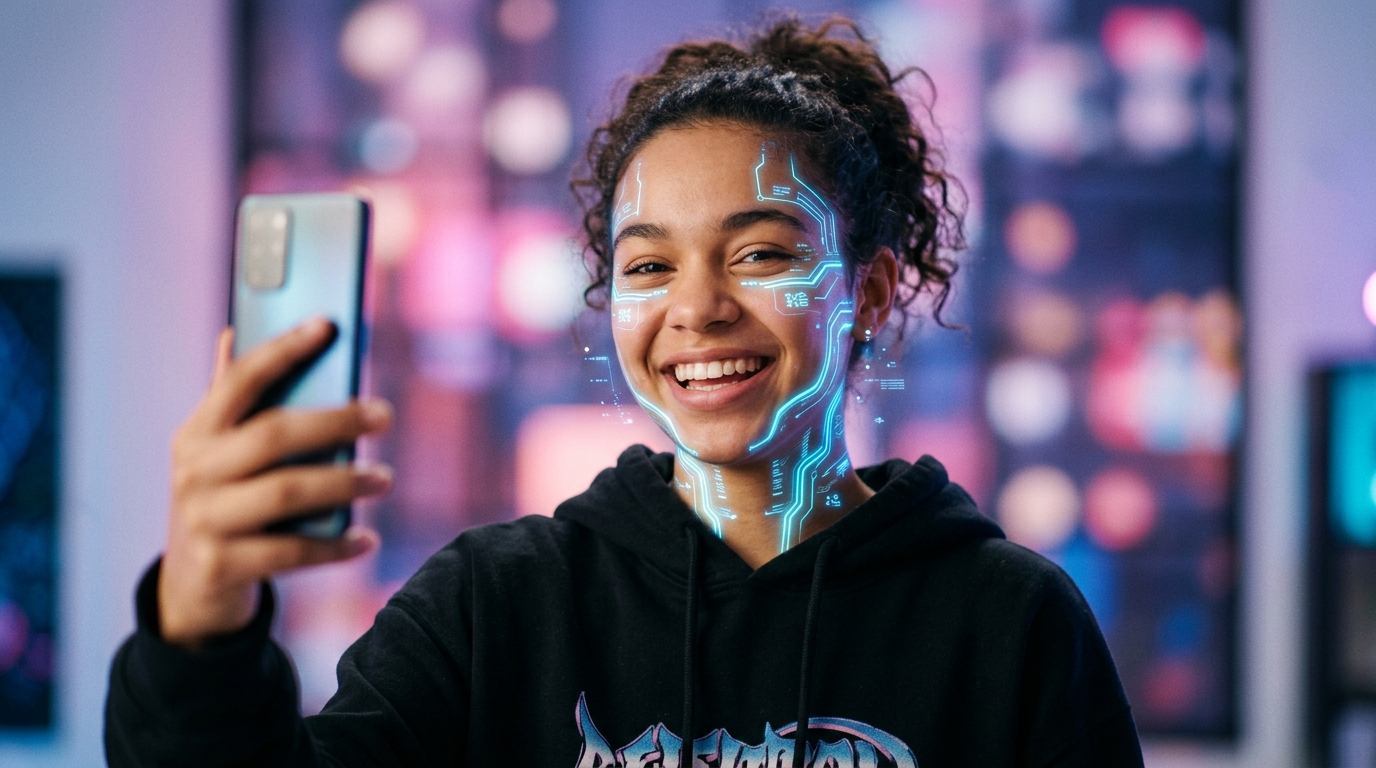

What Are AR AI Effects Filters?
AR AI filters overlay computer-generated visuals, animations, and transformations onto real-world imagery in real time. By combining augmented reality with machine learning, these filters can detect faces, track movement, understand scenes, and respond intelligently to what the camera sees. The result is everything from virtual makeup and 3D masks to full environmental transformations.
Why They've Exploded in Popularity
Several forces have driven mainstream adoption. Social platforms like Instagram, TikTok, and Snapchat made filters a native part of everyday communication. Meanwhile, advances in on-device AI mean effects that once required powerful servers now run instantly on smartphones. For creators and brands, filters offer an engaging, low-cost way to reach audiences and encourage user-generated content.
The AI Behind the Magic
Modern AR filters rely on several AI techniques working together:
Facial landmark detection maps dozens of points on a face to anchor makeup, accessories, or expressions accurately. Semantic segmentation separates people from backgrounds, enabling green-screen-style effects without a physical screen. Generative models can restyle faces, age or de-age subjects, and create realistic textures. Neural rendering blends synthetic elements with real footage so lighting and shadows look natural.
Popular Use Cases
- Beauty and fashion: Virtual try-ons for makeup, glasses, and clothing let shoppers preview products before buying.
- Marketing campaigns: Branded filters turn users into walking advertisements while feeling like entertainment.
- Entertainment and gaming: Interactive filters gamify the camera, rewarding engagement and sharing.
- Education and training: AR overlays visualize complex concepts, from anatomy to machinery.
Creating Your Own AR AI Filter
Getting started is more accessible than ever. Platforms like Meta Spark Studio, Snap's Lens Studio, and TikTok Effect House offer no-code and low-code tools with built-in AI capabilities. A typical workflow involves choosing a target (face, body, or environment), importing 3D assets or textures, applying AI tracking and segmentation components, then testing across devices before publishing.
Challenges and Considerations
The technology raises important questions. Privacy concerns arise when filters process biometric facial data. Unrealistic beauty standards perpetuated by "perfecting" filters have prompted mental-health discussions and even regulatory attention. Deepfake-style effects blur the line between real and synthetic, raising authenticity and consent issues. Responsible creators should be transparent about AI use and mindful of representation.
The Future of AR AI Filters
Looking ahead, expect filters to become more immersive and context-aware. The growth of AR glasses could move effects off the phone and into our field of view continuously. Generative AI will enable filters that are created on the fly from text prompts, and better scene understanding will let effects interact realistically with the physical world.
Conclusion
AR AI effects filters sit at the intersection of creativity, computer vision, and social connection. As the tools grow more powerful and accessible, they're opening new possibilities for creators, brands, and everyday users alike—while reminding us to use them thoughtfully.